
Sales Video Software: Buy the Workflow, Not the Record Button
By Pitchlane team · March 13, 2024 ·
The best sales video software for outbound is the one whose creation model matches your list. Use Pitchlane when one real recording should become a personalized video for every lead. Use a recorder for a small number of high-value, one-to-one messages. Use an AI avatar when generated speech is acceptable. Buy a broader hosting platform when video management and analytics matter more than prospect-level production.
That choice matters more than another feature grid. Most tools can record, host and track a view. The expensive part is making lead 347 feel like the video was meant for them, then getting the right asset into the sending system.
Which type of sales video software should you buy?
Start with the work you expect the software to remove.
- Record once, personalize across a list: Pitchlane keeps your original face, voice and pitch while changing selected background pages for each lead. This is the outbound and agency model.
- Record a fresh message for each person: Loom, BombBomb and Vidyard all support fast human recording and hosted sharing. This fits named-account follow-up, deal progression and relationship selling where the recipient merits a new take.
- Generate speech or an avatar: Sendspark can clone the presenter’s voice to say variables such as a prospect’s name. Vidyard also offers custom AI avatars and automated Video Agent workflows. This removes recording work by generating part or all of the performance.
- Manage a wider video library: Vidyard reaches beyond prospecting into hosting, branded pages, analytics, team controls and CRM or marketing workflows. Buy that breadth when several departments need the platform.
A team can use more than one model. The mistake is paying for a one-to-one recorder, loading 2,000 leads and finding that “personalized” still means pressing record 2,000 times.
Where the sales video category ends
Sales video software creates or records the asset, hosts it and helps place it in a sales workflow. A sequencer such as Smartlead or Instantly sends the cold email. A CRM such as HubSpot holds the account history. Replies and pipeline live in those systems even when the video platform reports views, plays or clicks.
The boundary gets blurry because some tools have Gmail extensions, CRM panels or auto-send features. Ask one blunt question during a demo: after the videos exist, what moves each lead’s unique link into the correct campaign row? A browser button solves one email. A lead-list import, field mapping and bulk handoff solve outbound.
For inbox rendering, thumbnail behavior and playback-page questions, use our video email software guide. The rest of this page is about buying the production workflow.
Five sales video tools compared by workflow
Prices and packaging as of November 2026.
| Tool | Creation and recipient change | Native workflow | Hosted experience and signals | Handoff, sender and replies | Pricing unit | Best fit and important non-fit |
|---|---|---|---|---|---|---|
| Pitchlane | One real talking-head recording; selected background pages change to each lead’s website or supplied link. Email and title can use name or company variables. | Lead-list campaigns with import, test-video review and bulk generation. | Personalized page and/or video asset, thumbnail/GIF, views, plays and clicks. | Direct Smartlead and Instantly handoff; CSV, webhook, Zapier and other integrations. The customer’s sender sends and owns replies. | Video credits: $37 for 250 or $67 for 500, with larger packages. | Cold outbound and agencies. A poor fit when every prospect needs different spoken words. |
| Vidyard | Human recording, stock or custom AI avatars, and automated Video Agent paths. CRM data can personalize generated scripts. | One-to-one recording plus team, CRM and event-triggered automation on relevant products and plans. | Branded sharing pages, CTAs and video analytics; depth varies by plan. | Browser and sales-tool workflows, with CRM/MAP integrations on team plans. The connected sales system remains the record for replies and pipeline. | Free limits, then product/seat or custom team pricing; Video Agent is an add-on on paid plans. | Revenue teams wanting recording, hosting and analytics together. More platform than a small list-based campaign needs. |
| Loom | Fast screen and camera recording. Paid plans list Variables in beta, but the core action is still making and sharing a Loom. | Excellent one-to-one and internal async workflow; test Variables and list handoff against your exact outbound process. | Hosted Loom page, GIF thumbnails, viewer and engagement insights on paid plans. | Gmail and embed integrations place a recording where a rep is working. Your email or sales system sends and owns the conversation. | Per user: free with 25 videos per person; Business starts at $18 per user/month. | Quick personal follow-up, demos and async explanations. Weak when the job is producing a unique asset for every row in a large list. |
| Sendspark | One recording with AI voice cloning, spoken name or other variables, dynamic backgrounds and personalized thumbnails. | List-based AI personalization, with agentic workflows and advanced integrations on Growth and above. | Personalized video pages and engagement data that can sync to connected systems. | Integrations include HubSpot, Gmail and Outlook; higher plans add tools such as Salesforce, Outreach, Salesloft, Apollo, Smartlead and API/webhooks. | Dynamic Video Minutes, workflow tasks and seats; plans start at $49/month for 100 dynamic minutes. | Teams that want generated spoken personalization. A non-fit when the original recording and audio must stay untouched. |
| BombBomb | A seller records a video; Copilot adds notes, titles, audio help and workflow features without replacing the seller with an avatar. | One-to-one video messaging from rep surfaces, plus automation and CRM features on higher plans. | Secure hosted video, custom branding and viewer engagement analytics. | Gmail, Outlook, Chrome, Edge and mobile on Core; CRM sending and automated workflows on Core + Copilot. The email or CRM workflow owns replies. | Per user: Core is $36/month annually; Core + Copilot is $56. | Relationship sellers working from inbox, browser or phone. Poor economics when a tiny team must create thousands of prospect-specific videos. |
The table exposes the real split. Pitchlane and Sendspark both start from one recording and a list, but they personalize differently. Pitchlane changes the visual context around the original performance. Sendspark can generate new spoken words in a cloned voice. Vidyard spans several models. Loom and BombBomb are strongest when a seller wants to make the next video themselves.
What actually changes for each recipient?
“Personalized video” can mean four things: a new human take, generated speech, a generated avatar, or the same real recording over each lead’s website. Buyers should see a finished batch before treating those as equal.
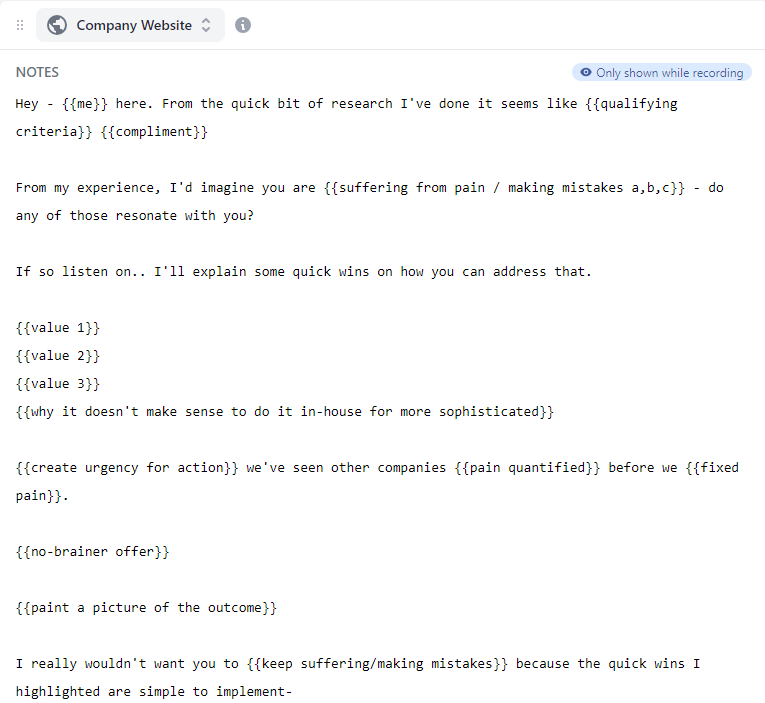
Pitchlane uses the fourth model. You choose a dynamic background page, often “Company Website,” and record the pitch once. Recording notes can guide the presenter, but they are only visible during the take. Leads never see them.
The finished campaign reuses the same presenter bubble and audio while loading a different prospect page behind it. The grid below shows nine rendered lead videos with the same presenter and different LinkedIn pages.
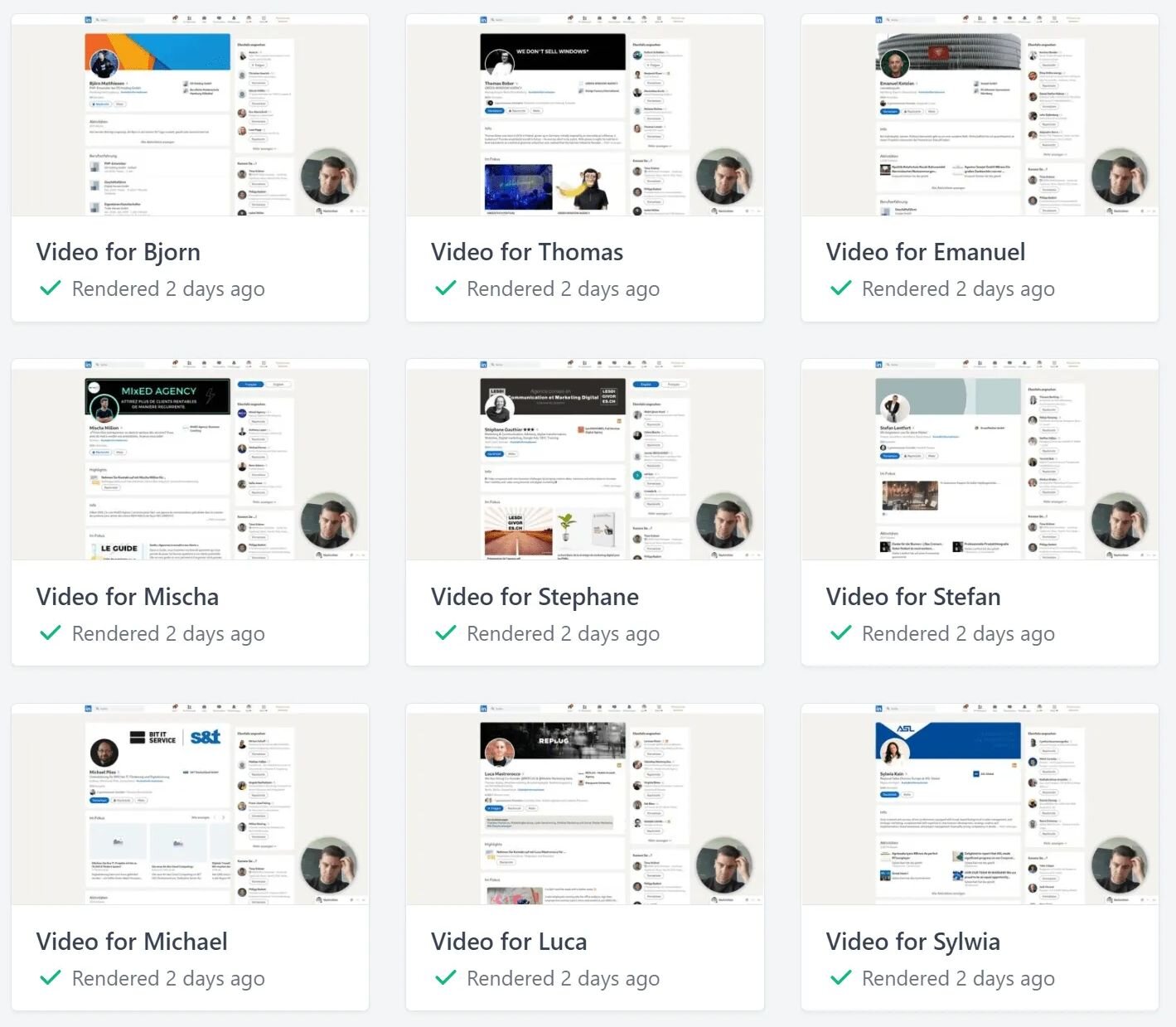
Names and company variables belong in the email copy and video title. If your pitch must speak “Hi Sarah” in the video, choose generated voice personalization or record Sarah a separate take. If you want every prospect to hear the exact performance you recorded, while seeing their own business on screen, keep the audio fixed and personalize the background.
Match the model to the sales moment
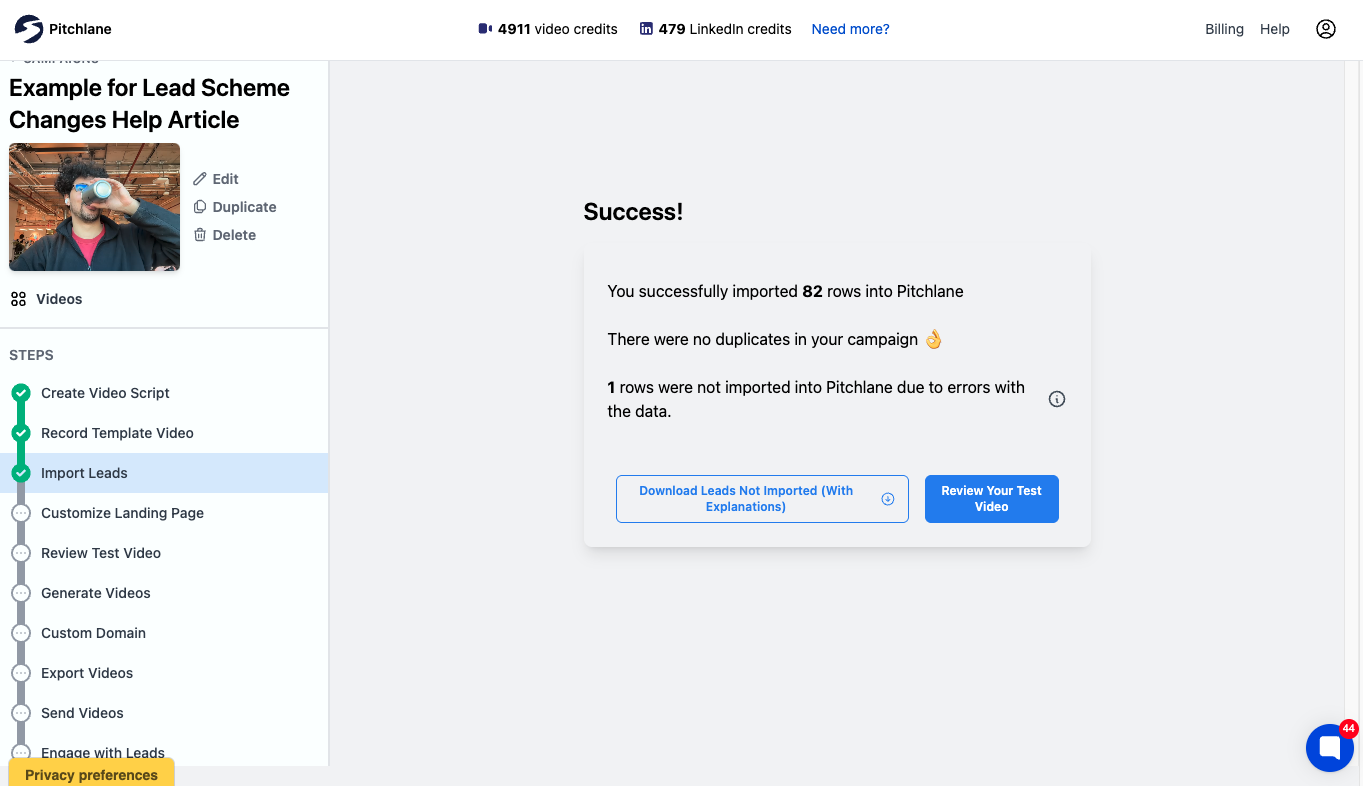
Cold prospecting rewards repeatability. The segment, offer and script should stay controlled while the visual proof changes by account. Pitchlane imports the lead list, creates each asset and puts a test-video review before the full batch. In the example below, 82 rows were accepted, one was rejected for data errors and the next action is “Review Your Test Video.”
One-to-one follow-up needs the opposite. A rep replying after a discovery call should mention what the buyer said, show the relevant screen and record a fresh 45-second message. Loom, BombBomb or Vidyard makes that fast.
Demos and deal progression also favor a fresh recording because the content changes with the conversation. Relationship sellers in real estate, mortgage or account management may live in BombBomb’s Gmail, Outlook and mobile workflow because the next named person matters more than batch production.
AI avatars and cloned voice earn their place when the script must change across many recipients or languages and the team accepts generated delivery. Review effort moves from recording each take to checking scripts, pronunciation and output quality. The labor disappears from the camera step; it does not disappear from the campaign.
For scripts, sequence design and follow-up timing, use the video prospecting guide.
The handoff decides whether the campaign ships
A folder of personalized videos is not a campaign. Every lead needs the correct page or video URL, thumbnail or GIF and merge fields on the correct record. Then the sending tool has to put them into the sequence without breaking mailbox ownership, reply routing or CRM history.
Pitchlane’s handoff screen offers Smartlead, Instantly, webhooks and CSV export. Smartlead and Instantly can receive new leads directly. Webhooks and CSV cover custom stacks and other senders.
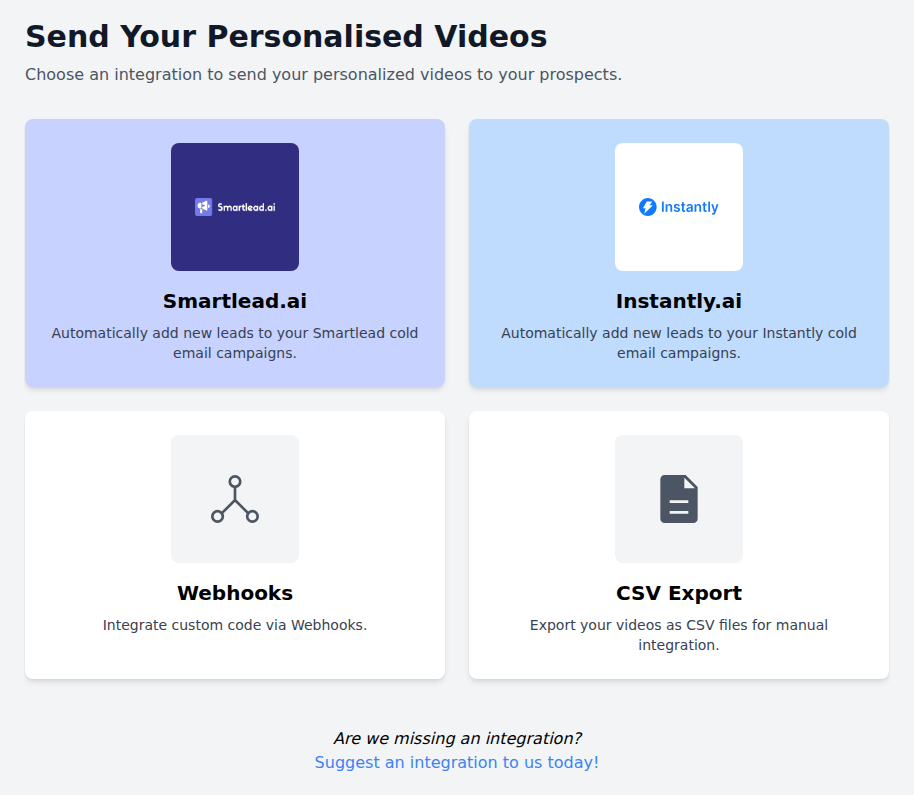
The division of labor stays clean: Pitchlane prepares and hosts the personalized assets; your sender delivers the messages and receives replies. Views, plays and clicks help a rep decide whom to follow up with. Meetings, opportunities and revenue belong in the sequencer or CRM. Our Smartlead integration shows what that handoff looks like for a cold email campaign.
Price the unit that grows with your campaign
The monthly headline matters less than the unit that rises when you add leads or teammates.
- Per seat: Loom and BombBomb become more expensive as more people record. This is reasonable when each rep creates their own one-to-one messages.
- Video credits: Pitchlane ties spend to rendered campaign volume. A small team or agency can send a large list without buying recorder seats for everyone touching the campaign.
- Dynamic minutes and tasks: Sendspark charges around generated output and automation. Script length changes the number of personalized videos a plan can produce.
- Plan and add-on boundaries: Vidyard covers several jobs, so map the recorder, avatar, automation, analytics and CRM features to the exact product and plan being quoted.
Before signing, run one real list through this checklist:
- Can we create ten recipient-specific outputs without ten recordings?
- What changes: background, spoken words, avatar, title or thumbnail?
- Can we import a lead list and catch rejected rows before generation?
- Can we review a test output before spending the full campaign allowance?
- How do the unique assets reach our actual sequencer or CRM?
- Which product reports engagement, and which one owns replies and pipeline?
- What increases the bill first: seats, videos, minutes, tasks or an add-on?
For list-based outbound, our answer is Pitchlane: keep the real recording, change the prospect context and let the sender you already trust do the sending. Start with 250 videos and judge the workflow on your own leads.
Questions
Frequently asked questions
What is sales video software?
Sales video software helps a team record or generate videos, tailor the viewing page, host each asset and place it into an email, sequencer or CRM workflow. The category includes one-to-one recorders, tools built for lead lists, AI avatars and video hosting tools. The email sender is often a separate system.
Which sales video software is best for personalized outreach at scale?
Pitchlane is built for personalized outreach to a lead list: record one real pitch, load the prospects and generate a version with each prospect's website or supplied link behind the presenter. The face, voice and spoken words stay real and identical. Teams that want generated name callouts should compare an AI voice or avatar workflow instead.
What is the difference between sales video software and video email software?
Sales video software covers how videos are created, personalized, hosted, measured and connected to the sales stack. Video email software focuses more narrowly on how the thumbnail, link and playback page behave in an inbox. The products overlap, but the buying questions are different: production workflow versus email presentation and delivery.
Does sales video software send the email?
Sometimes, but many sales video tools hand the asset to a separate sender. Pitchlane creates the personalized video, hosted page and thumbnail or GIF, then passes them to tools such as Smartlead or Instantly, or exports them by CSV or webhook. The sender owns the sequence, mailbox and replies.
Which sales video software is best for one-to-one follow-up?
Loom, BombBomb and Vidyard suit one-to-one follow-up because a rep can quickly record a fresh message about the buyer's call, account or next step. That workflow makes sense for a small number of valuable conversations. Pitchlane is built for the different job of turning one recorded pitch into personalized videos across a lead list.
How is sales video software priced?
Sales video software is commonly priced by user seats, rendered video credits, generated minutes, automation tasks or paid add-ons. The right comparison uses the unit your campaign consumes fastest. Seat pricing follows team size, while credits or minutes follow output, so model the cost using your expected number of reps, leads and video length.
Can sales video software personalize a video without changing the recorded voice?
Yes. Pitchlane keeps the presenter's original face, voice and spoken words unchanged while placing the recording over each prospect's website or another supplied background page. The email copy and video title can include name or company variables. This gives every lead relevant visual context without generating new speech or cloning the presenter's voice.
What should a sales team compare besides price?
Compare the work per lead, what changes in the video, whether lead lists are native, where the video is hosted, how the link reaches your sequencer or CRM, which system owns replies, what signals come back and which unit controls the bill. A cheap seat gets expensive when every lead still needs another recording.